
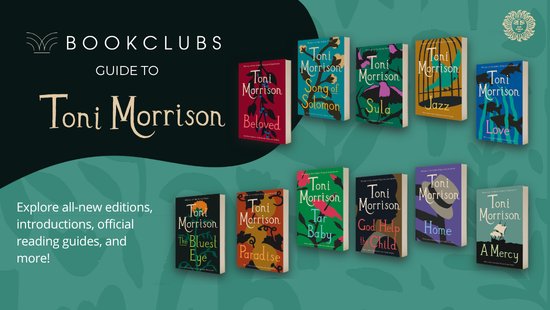
Toni Morrison transformed American literature. Over the course of a remarkable career spanning more than four decades, she authored some of the most celebrated and influential novels of the twentieth century, becoming the first Black woman to receive the Nobel Prize in Literature and earning a place in the hearts and bookshelves of readers around the world.
Through unforgettable characters and lyrical prose, Morrison explored memory, identity, family, race, history, and belonging in ways that continue to shape readers, writers, and book club discussions today. In celebration of Vintage International's newly released editions of Morrison's novels—each featuring a new cover and new introductions by acclaimed contemporary writers including Jacqueline Woodson, Jesmyn Ward, Tayari Jones, Tommy Orange, and Honorée Fanonne Jeffers—we've created this official Bookclubs guide as a one-stop resource for readers and book clubs looking to discover, revisit, and discuss her extraordinary body of work.
From the haunting legacy of Beloved and the unforgettable friendship at the heart of Sula to the coming-of-age journey of Song of Solomon and the devastating beauty of The Bluest Eye, explore Morrison's most celebrated novels below, along with discussion guides and resources to enrich your next book club conversation.
Plus, be sure to enter our Toni Morrison Giveaway for a chance to win a special collection of Toni Morrison's newly reissued editions featuring introductions by today's most acclaimed writers.
Contest closes June 30, 2026.
This article was created in partnership with Penguin Random House.
The Official Bookclubs Guide to Toni Morrison
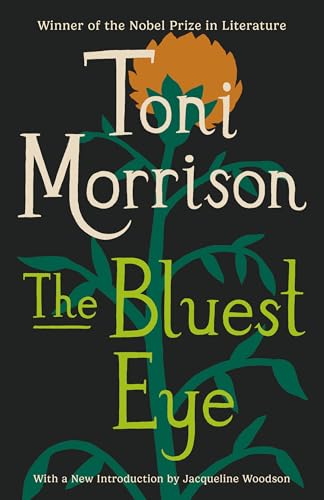
The Bluest Eye
New introduction by Jacqueline Woodson
Morrison's groundbreaking debut novel, written while she was working as an editor at Random House, established many of the themes that would define her career.
In Morrison’s bestselling first novel, Pecola Breedlove—an 11-year-old Black girl in an America whose love for its blond, blue-eyed children can devastate all others—prays for her eyes to turn blue: so that she will be beautiful, so that people will look at her, so that her world will be different. This is the story of the nightmare at the heart of her yearning, and the tragedy of its fulfillment.
“So precise, so faithful to speech and so charged with pain and wonder that the novel becomes poetry.” —The New York Times



Beloved
New introduction by Honorée Fanonne Jeffers
Winner of the Pulitzer Prize and widely considered one of the greatest American novels of the twentieth century, Beloved was inspired in part by the true story of Margaret Garner.
Sethe was born a slave and escaped to Ohio, but eighteen years later she is still not free. Sethe has too many memories of Sweet Home, the beautiful farm where so many hideous things happened. And Sethe’s new home is haunted by the ghost of her baby, who died nameless and whose tombstone is engraved with a single word: Beloved.“A masterwork.... Wonderful.... I can’t imagine American literature without it.” —John Leonard, Los Angeles Times

Song of Solomon
New introduction by Tayari Jones
One of The Atlantic’s Great American Novels of the Past 100 Years, Morrison's breakthrough novel and winner of the National Book Critics Circle Award, Song of Solomon helped introduce her work to a mainstream audience. It also was the first of many of her books selected for Oprah's Book Club.
Milkman Dead was born shortly after a neighborhood eccentric hurled himself off a rooftop in a vain attempt at flight. For the rest of his life he, too, will be trying to fly. As Morrison follows Milkman from his rustbelt city to the place of his family’s origins, she introduces an entire cast of strivers and seeresses, liars and assassins, the inhabitants of a fully realized Black world.“A rhapsodic work. . . . Intricate and inventive.” —The New Yorker

Sula
New introduction by Jesmyn Ward
Morrison's acclaimed second novel explores friendship, individuality, and community through the lives of two women whose bond is tested across decades.
Sula and Nel are born in the Bottom—a small town at the top of a hill. Sula is wild, and daring; she does what she wants, while Nel is well-mannered, a mamma’s girl with a questioning heart. Growing up they forge a bond stronger than anything, stronger even than the dark secret they have to bear. Strong enough, it seems, to last a lifetime—until, decades later, as the girls become women, Sula’s anarchy leads to a betrayal that may be beyond forgiveness.
“Extravagantly beautiful. . . . Enormously, achingly alive.” —The New York Times

Jazz
New introduction by Kevin Young
The second novel in Morrison's acclaimed trilogy that began with Beloved and concluded with Paradise, Jazz captures the energy and improvisational spirit of Harlem in the 1920s.
In Harlem in 1926, Joe Trace commits a devastating act of violence, and his wife, Violet, responds in a moment that sends the novel searching through love, obsession, memory, and the rhythms of a changing city.
“As rich in themes and poetic images as her Pulitzer Prize-winning Beloved.... Morrison conjures up the hand of slavery on Harlem’s jazz generation.” —Glamour
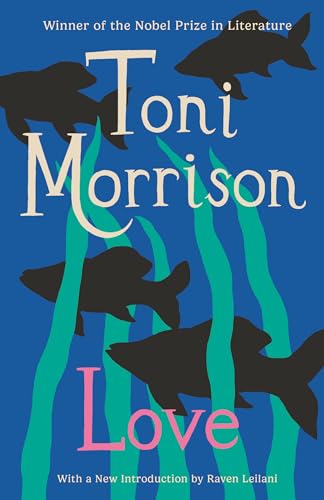
Love
New introduction by Raven Leilani
In life, Bill Cosey enjoyed the affections of many women, who would do almost anything to gain his favor. In death his hold on them may be even stronger. Wife, daughter, granddaughter, employee, mistress: As Morrison’s protagonists stake their furious claim on Cosey’s memory and estate, using everything from intrigue to outright violence, she creates a work that is shrewd, funny, erotic, and heartwrenching.
“A marvelous work, which enlarges our conception not only of love but of racial politics.” —Los Angeles Times Book Review

Paradise
New introduction by Tommy Orange
The acclaimed Nobel Prize winner challenges our most fiercely held beliefs as she weaves folklore and history, memory and myth into an unforgettable meditation on race, religion, gender, and a far-off past that is ever-present in prose that soars with the rhythms, grandeur, and tragic arc of an epic poem. “They shoot the white girl first. With the rest they can take their time.” So begins Toni Morrison's Paradise, which opens with a horrifying scene of mass violence and chronicles its genesis in an all-black small town in rural Oklahoma. Founded by the descendants of freed slaves and survivors in exodus from a hostile world, the patriarchal community of Ruby is built on righteousness, rigidly enforced moral law, and fear. But seventeen miles away, another group of exiles has gathered in a promised land of their own. And it is upon these women in flight from death and despair that nine male citizens of Ruby will lay their pain, their terror, and their murderous rage.
“A fascinating story, wonderfully detailed. . . . The town is the stage for a profound and provocative debate.” —Los Angeles Times

Tar Baby
New introduction by Sasha Bonét
The novel that allowed Morrison to devote herself fully to writing, Tar Baby examines race, class, desire, and belonging through a complex love story.
Jadine Childs is a Black fashion model with a white patron, a white boyfriend, and a coat made out of ninety perfect sealskins. Son is a Black fugitive who embodies everything she loathes and desires. As Morrison follows their affair, which plays out from the Caribbean to Manhattan and the deep South, she charts all the nuances of obligation and betrayal between Blacks and whites, masters and servants, and men and women.
“Arresting images, fierce intelligence, poetic language . . . One becomes entranced by Toni Morrison’s story.” —The Washington Post

God Help the Child
New introduction by Danzy Senna
Morrison's final novel revisits themes of race, beauty, family, and acceptance that first appeared in The Bluest Eye, now viewed through a contemporary lens.
At the center: a young woman who calls herself Bride, whose stunning blue-black skin is only one element of her beauty, her boldness and confidence, her success in life, but which caused her light-skinned mother to deny her even the simplest forms of love. There is Booker, the man Bride loves, and loses to anger. Rain, the mysterious white child with whom she crosses paths. And finally, Bride’s mother herself, Sweetness, who takes a lifetime to come to understand that “what you do to children matters. And they might never forget.”
“Powerful. . . . A tale that is as forceful as it is affecting, as fierce as it is resonant.” —Michiko Kakutani, The New York Times

Home
New introduction by Julia Alvarez
When Frank Money joined the army to escape his too-small world, he left behind his cherished and fragile little sister, Cee. After the war, he journeys to his native Georgia with a renewed sense of purpose in search of his sister, but it becomes clear that their troubles began well before their wartime separation. Together, they return to their rural hometown of Lotus, where buried secrets are unearthed and where Frank learns at last what it means to be a man, what it takes to heal, and—above all—what it means to come home.
“Powerful. . . . Jaw-dropping in its beauty and audacity. . . . Brims with affection and optimism.” —San Francisco Chronicle

A Mercy
New introduction by Imani Perry
In the 1680s the slave trade in the Americas is still in its infancy. Jacob Vaark is an Anglo-Dutch trader and adventurer, with a small holding in the harsh North. Despite his distaste for dealing in “flesh,” he takes a small slave girl in part payment for a bad debt from a plantation owner in Catholic Maryland. This is Florens, who can read and write and might be useful on his farm. Rejected by her mother, Florens looks for love, first from Lina, an older servant woman at her new master's house, and later from the handsome blacksmith, an African, never enslaved, who comes riding into their lives.
“Spellbinding. . . . Dazzling. . . . [A Mercy] stands alongside Beloved as a unique triumph.” —The Washington Post Book World